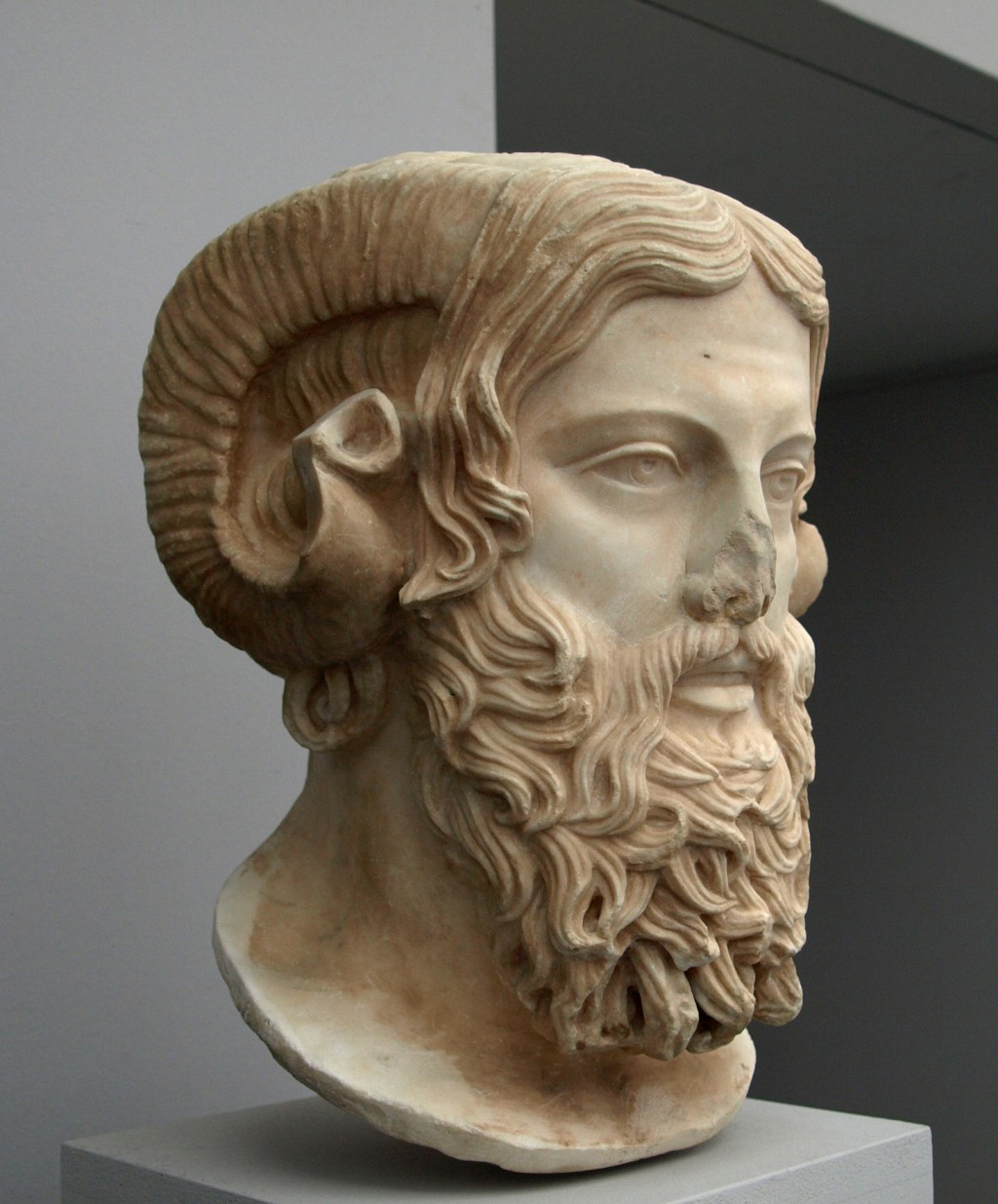
Zeus Ammon is a good example of what happens when two cultures create hybrid gods; this process is called syncretism. He is a fusion of the Greek Zeus, king of the gods, combined with the Egyptian god Amon (Amun), who held a similar position in Egypt. Over time, this identification became the horned figure of Zeus Ammon.
Amon: King of the Egyptian gods
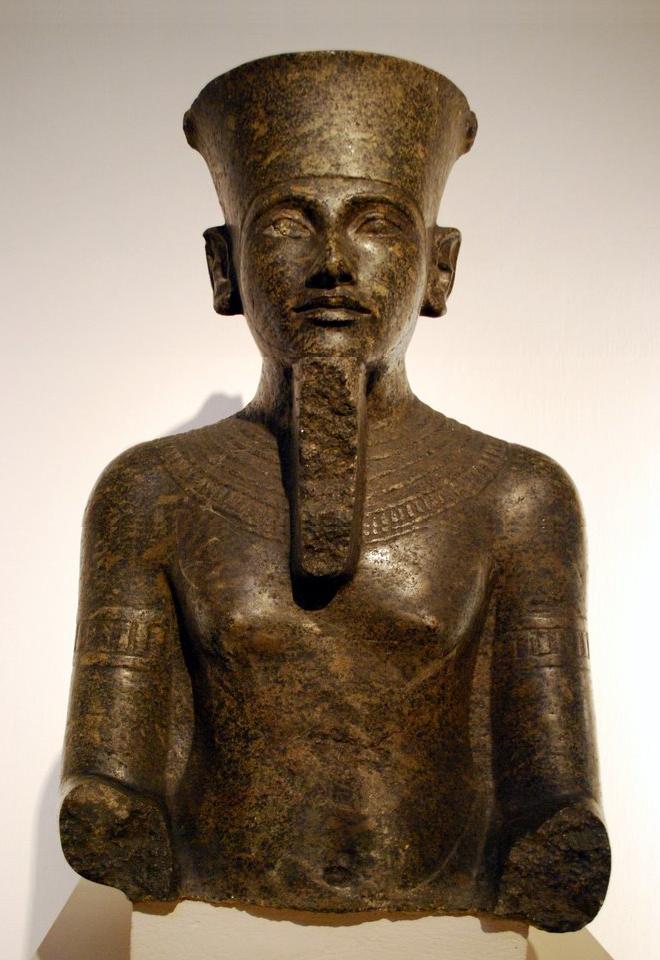
Amon was already a major god in Egyptian mythology long before the days of classical Greece. By around the year 2000 BCE, he was regarded as a national god and patron of the pharaohs. He had an established cult in Thebes and was associated there with the sun god Re, becoming Amon-Re. He was a powerful creator figure who was closely linked with the political well-being of Egypt itself. He was presented as an invisible god; because of this, he was thought to be impartial and unbiased, able to help people who were wronged or oppressed. He was often depicted in the color blue and wearing ram’s horns.
After centuries of political change, Amon’s most famous oracle ended up in the Libyan desert at Siwa. There, a priesthood maintained the oracle, which foreigners as well as Egyptians could consult. It is here that he began to be associated with Zeus.
Greek–Egyptian exchange and why syncretism made sense
When the two civilizations came into closer connection – through trade and Greek colonization in North Africa – they didn’t just exchange commodities. They also exchanged gods, myths, and artistic styles. Greek settlers and travelers met Amon and must have seen a connection with their Zeus. He is mentioned by Greek authors such as Pindar, and it is said that Heracles, Perseus, and Dionysus had visited the oracle at Siwa.
The cultural mixing wasn’t just religious. Early Greek sculptors borrowed from Egyptian sculpture in the archaic period, and this can be seen in earlier sculptures at the sanctuary at Delphi, such as the Naxian sphinx (560 BCE). The rigid, front-facing kouros and kore figures also clearly resemble Egyptian standing statues.
From Amon to Zeus Ammon
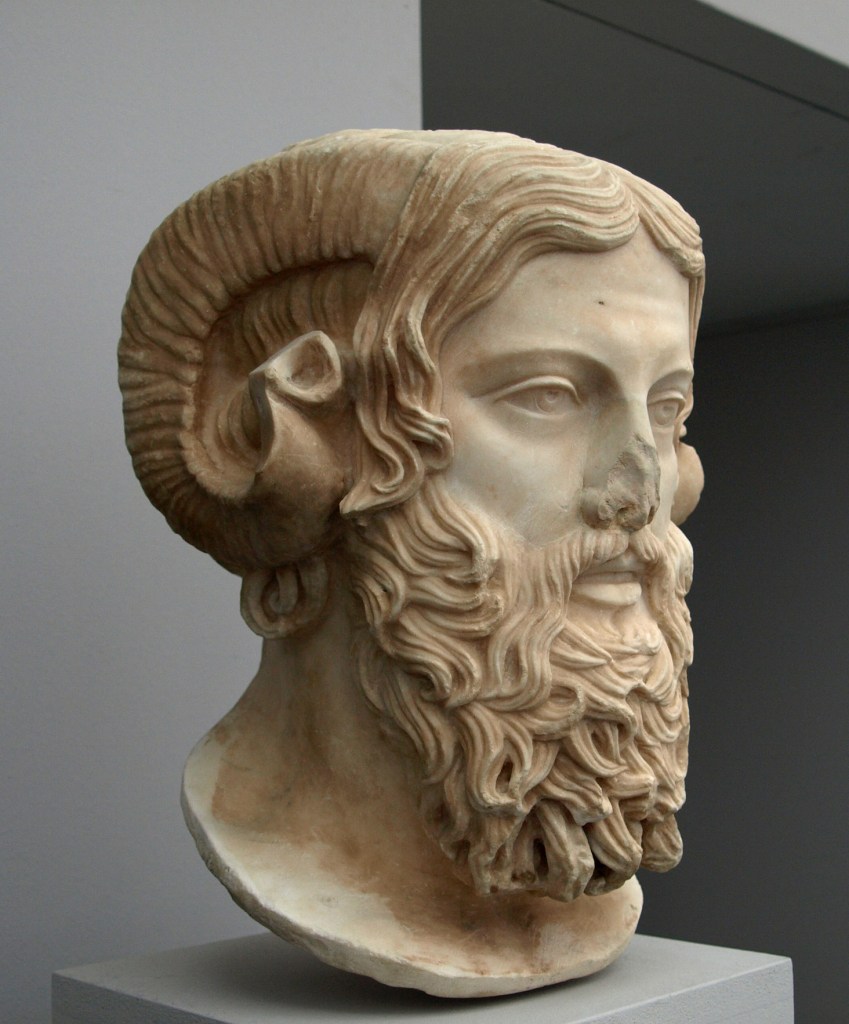
Through the process of syncretism, Amon became Zeus Ammon in Greek eyes. Greeks on the mainland started to worship Zeus Ammon, and temples were built in his honor. One temple was the sanctuary of Zeus Ammon at Kallithea, which has been relatively recently excavated. Some of these temples have shown slightly different characteristics from traditional Greek temples, with more open-air architecture, which hints at more Egyptian styles1.
In art, Zeus Ammon is usually depicted as a bearded Zeus-type figure with curved ram’s horns curling around his ears. This is evidenced through coins and sculpture.
Zeus Ammon and Alexander the Great
The most famous visitor to the oracle at Siwa was Alexander the Great in 331 BCE. According to one of Alexander’s biographers, Arrian, the oracle had already been visited by Heracles and Perseus, whom Alexander was keen to emulate. Ancient authors disagree about what exactly happened, and Alexander did not reveal what occurred at the oracle, but one part of the story became crucial: that he was greeted by the chief priest as the son of Ammon.
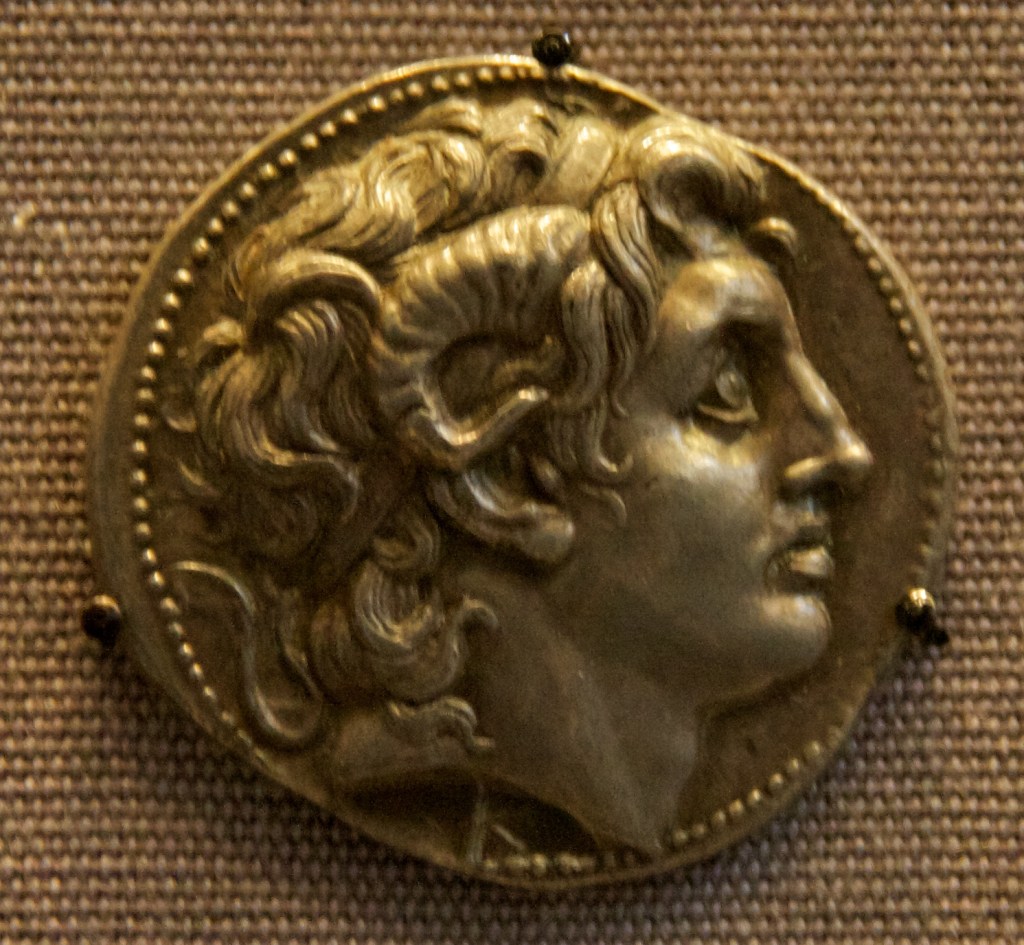
Coin with head of Alexander. Object 31 of 100. About 305-281BC. Lampsacus (modern Lapseki), Turkey, Silver. 1919.0820.1 Photograph by Mike Peel (www.mikepeel.net)., CC BY-SA 4.0 https://creativecommons.org/licenses/by-sa/4.0, via Wikimedia Commons
For a Macedonian king steeped in Greek mythology and supposedly descended from Heracles and Achilles, this visit to the oracle easily translated into his identity as the son of Zeus Ammon. The king embraced this, commissioning coins and portraits showing him with ram’s horns, signaling that he had a divine connection across his empire.


Leave a Reply